Bathroom demolition is often the first step toward creating the spa-like retreat or modern washroom you’ve always envisioned. However, tearing down tile, removing fixtures, and dismantling cabinetry is more than just a hammer-and-chisel task—it requires careful planning. Rushing into demolition without preparation can lead to costly mistakes, unexpected delays, or damage to plumbing and electrical systems. An effective plan helps ensure that the process runs smoothly, minimizes disruption, and keeps your renovation project on track.
From identifying materials that need to go, to mapping out disposal options, every step matters when preparing for bathroom demolition. It’s about more than removing what’s old—it’s about setting the stage for what’s new. A well-executed plan saves time, reduces stress, and allows you to focus on the exciting transformation that lies ahead. With the right approach, bathroom demolition becomes less of a headache and more of a productive foundation for improvement.
Understanding why bathroom demolition requires planning
Many homeowners underestimate the complexity of a bathroom demolition. Unlike tearing down a wall in another part of the house, bathrooms are packed with plumbing lines, electrical wiring, and moisture-sensitive materials. A single careless move could damage pipes or wiring, leading to expensive repairs before renovation can even begin. Planning allows you to avoid these missteps and ensures that everything is dismantled in a controlled, organized way.
Effective planning also helps keep the renovation budget intact. Without a structured approach, costs can spiral as unexpected repairs or disposal fees arise. When you take time to map out each phase—what needs to be removed first, where debris will go, and how to protect remaining fixtures—you build efficiency into the process. Bathroom demolition is not just about tearing things apart; it’s about managing a complex sequence of steps with foresight and precision.
Evaluating the condition of existing bathroom features
Before demolition starts, it’s important to assess the condition of existing bathroom features. Cabinets, sinks, tubs, or even tile may still have resale or repurpose value. Some items might be salvaged for reuse in another space, while others may need careful dismantling to avoid breakage. Evaluating these elements beforehand helps decide what should be preserved and what must be discarded.
This evaluation also reveals potential challenges. For example, older bathrooms may have layers of flooring beneath the surface tile, or outdated plumbing fixtures made from materials that require special handling. Recognizing these factors early prevents surprises once demolition begins. The condition of the space dictates the approach—whether it’s a straightforward teardown or a meticulous process requiring extra tools and protective measures. Assessing before acting ensures that you’re fully prepared for whatever the project uncovers.
Setting a realistic demolition timeline
Bathroom demolition rarely takes just a single day, especially if the project involves removing tile, plumbing, or built-in cabinetry. Setting a realistic timeline helps you avoid rushing through critical steps. Breaking the project into smaller phases—such as fixture removal, flooring tear-out, and wall dismantling—provides a structured plan that makes the work more manageable.
A realistic timeline also accounts for potential obstacles, like hidden water damage or the need for specialized disposal. It’s better to plan for extra time and finish early than to underestimate and create unnecessary stress. A carefully scheduled demolition not only keeps your renovation project on track but also ensures safety. By setting expectations for how long each stage will take, you allow the process to unfold in a more orderly, predictable way, paving the way for the smoother installation of your new bathroom.
Protecting plumbing and electrical systems during demolition
Bathrooms are packed with systems that need extra care during demolition. Pipes, drains, and water lines are easily damaged if you start removing fixtures without shutting off the water supply. Similarly, electrical outlets and light fixtures should be disconnected properly to prevent dangerous accidents. Protecting these systems is a crucial part of demolition planning and ensures that no additional repair costs arise.
Taking the time to locate shut-off valves, circuit breakers, and access points helps you dismantle the bathroom without unnecessary risks. In some cases, it may be worth hiring a licensed professional to disconnect sensitive systems before the demolition begins. Damage to plumbing or electrical wiring can quickly derail a renovation, but careful preparation allows you to work efficiently while avoiding hazards. Safety and protection of these systems should always remain at the top of your demolition checklist.
Choosing the right tools for bathroom demolition
Having the right tools at hand makes bathroom demolition both safer and more efficient. A sledgehammer might seem like the go-to choice, but smaller precision tools like pry bars, reciprocating saws, and utility knives often do the bulk of the work. These tools allow for controlled dismantling, especially in tight spaces where large swings aren’t practical.
Protective gear is just as important as demolition tools. Safety glasses, gloves, dust masks, and knee pads keep you protected while handling heavy or sharp materials. Investing in the correct tools ensures that each stage—whether removing tile, cabinetry, or drywall—proceeds smoothly. Without them, you risk delays, damage, or even injury. By planning ahead and equipping yourself properly, you not only save time but also make the entire process less stressful and more precise.
Managing debris and disposal efficiently
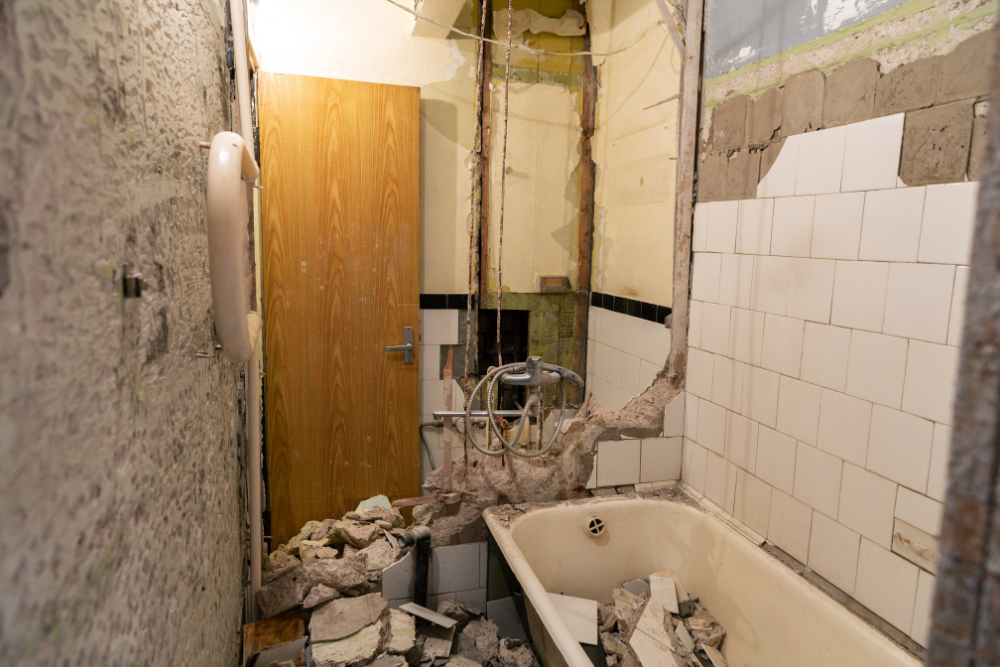
Bathroom demolition generates a surprising amount of waste. Broken tiles, drywall, old sinks, and tubs all need to be hauled away, and this can quickly overwhelm a standard trash bin. Efficient disposal planning is essential. Renting a dumpster or arranging junk removal services ensures that the waste is cleared out as the project progresses rather than piling up and slowing you down.
Proper disposal is not just about convenience; it’s also about compliance. Many cities have rules about how construction debris should be discarded, particularly items like treated wood or plumbing components. By managing disposal responsibly, you maintain a clean, safe workspace while also adhering to local guidelines. Debris management is often overlooked, but it plays a critical role in keeping the demolition organized, timely, and environmentally responsible.
Factoring in hidden issues during bathroom demolition
Older bathrooms often conceal surprises that only come to light during demolition. Mold, water damage, or outdated plumbing hidden behind walls and floors can change the scope of the project significantly. Factoring in the possibility of hidden issues before starting helps prepare both your budget and your timeline.
Rather than viewing these problems as setbacks, see them as opportunities to improve your bathroom from the ground up. Fixing hidden damage during demolition ensures that your new bathroom will be structurally sound and long-lasting. While these discoveries may require additional work, acknowledging their possibility ahead of time reduces frustration. Being flexible and prepared allows you to handle challenges without derailing the overall renovation project.
Balancing DIY efforts with professional help
Some homeowners take pride in tackling demolition themselves, and it’s certainly possible for smaller tasks. However, bathrooms often demand expertise, especially when plumbing or electrical systems are involved. Knowing when to call in professional help ensures that the project is both safe and effective. A balance of DIY efforts and expert assistance often leads to the best outcome.
For example, you might handle the removal of cabinets or fixtures while professionals manage the disconnection of pipes and wiring. This approach saves money while ensuring that critical systems are handled correctly. Balancing your own skills with the knowledge of professionals allows for a smoother, safer demolition process. It’s not about doing everything yourself—it’s about knowing where your efforts will be most valuable and when outside help is essential.
Preparing the space for renovation after demolition
Once the demolition is complete, the bathroom space becomes a blank canvas ready for transformation. However, preparation doesn’t stop when the last piece of tile is removed. Cleaning, leveling surfaces, and addressing any underlying repairs are essential before the renovation can begin. Skipping this step can lead to issues later, such as uneven tile installation or lingering moisture damage.
This stage is also the perfect time to check for upgrades like improved insulation, waterproofing, or ventilation. Preparing the space properly ensures that the new bathroom will not only look beautiful but also function effectively for years to come. Demolition clears the old, but preparation sets the foundation for everything that follows. Taking the extra time here pays off when your newly renovated bathroom is both stylish and structurally sound.
Maintaining safety throughout the demolition process
Safety must remain a constant focus during bathroom demolition. Flying debris, sharp tools, and heavy fixtures present risks that require caution at every step. Establishing a clear work zone helps minimize accidents, while protective gear reduces exposure to hazards. Safety isn’t an afterthought—it’s built into every part of the demolition plan.
Good practices include working methodically, taking breaks to prevent fatigue, and keeping the area well-ventilated to minimize dust. If others are living in the home during the project, sealing off the demolition zone also prevents debris from spreading. Maintaining a safe environment ensures that the project moves forward without setbacks caused by injuries or accidents. Effective planning combines efficiency with protection, resulting in a smoother and more successful bathroom demolition.
Conclusion
Planning for bathroom demolition is about more than tearing out tile and old fixtures—it’s a process that requires foresight, organization, and care. Each stage, from protecting plumbing and electrical systems to managing waste disposal, plays a role in setting the stage for a successful renovation. By preparing thoroughly, you avoid costly mistakes and create an environment where the new design can shine. Whether handled independently or with professional support, effective demolition planning transforms the experience from stressful chaos into a streamlined first step toward renewal.
For homeowners in Santa Rosa, CA, North Bay Junk Removal provides reliable junk removal services to handle debris and waste from bathroom demolition and beyond. Their team ensures that materials are hauled away efficiently and responsibly, leaving your home ready for the next phase of renovation. Call 707-478-6817 today to schedule professional junk removal with North Bay Junk Removal and make your bathroom renovation journey smoother.